What are the main and auxiliary materials for floor heating systems ?
First understand then choose !
As we all know, the water floor heating system is a complex project. It consists of floor heating main material and floor heating auxiliary material. The main material determines the safety and stability of the floor heating, and the auxiliary material determines the environmental protection and energy saving of the floor heating.
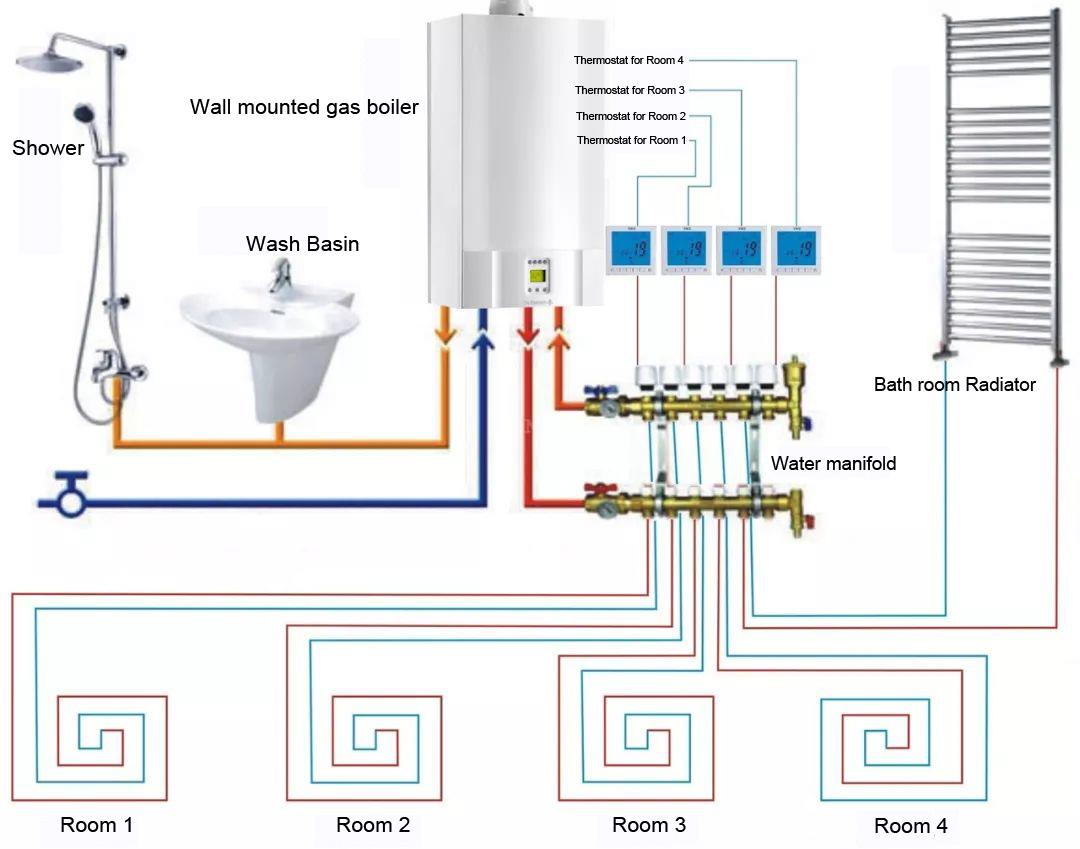
Heating main equipment parts: wall-hung boilers, main heating pipes, manifolds, floor heating pipes, thermostats, etc. Large-sized houses are also equipped with heating circulating pumps (pressurization) and thermostatic mixing valves (energy-saving and comfortable). These equipment are the main components of floor heating, and are also the main consumables for floor heating, especially wall-hung boilers and floor-heating pipes, which basically account for most of the cost of floor heating.
Floor heating auxiliary parts: reflective film, extruded board (insulation board), steel wire mesh, border insulation, floor heating staples, insulation casing, raw material belt, ball valve and so on. There are many varieties of these auxiliary materials and the market is complex, but these auxiliary materials are an important part of the floor heating installation. The energy-saving effect and insulation effect of the floor heating system are inseparable from the floor heating auxiliary materials.
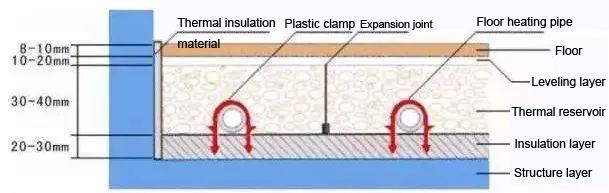
Explanation of floor heating equipment
Heating boiler
Wall-hung boilers is the center of the heat source for the floor heating, meets the heat required in the entire system. Wall-hung boiler is also the most fiercely heated equipment for floor heating brands. The most common type of heating boiler is gas-fired wall-mounted boilers, which are divided into ordinary furnaces and condensing furnaces.
Floor heating pipe
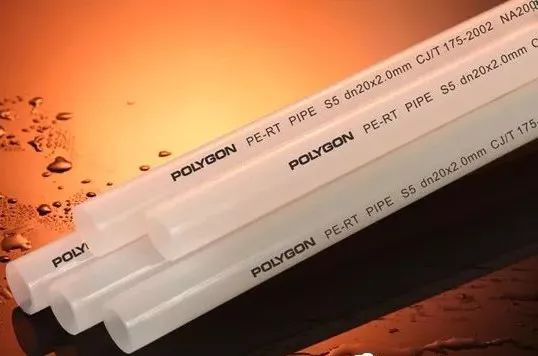
It is the medium for the heat transfer of the floor heating system. The life of the floor heating depends on the choice of the floor heating pipe. The lifespan of the floor heating pipe is generally 50 years. According to different materials, it can be divided into PE-RT tube, PEX tube, PB tube, aluminum-plastic composite tube.
Water Manifold
Including branch pipe of manifold, air vent and water drain devices, branch pipe valve and connection accessories. It is equivalent to the heart of the floor heating system. The hot water of the entire floor heating system is evenly distributed to each branch by the water collector. After being circulated in the floor heating pipe, it is brought together and then redistributed under the effect of the water pump. Ensure the safety and operation of the entire heating system.

Thermostat for Floor heating
By accurately detecting the room temperature, the measured temperature signal is transmitted to the inside of the thermostat and compared with temperature that our user set until the indoor temperature is automatically adjusted to the ideal temperature that we set. Common LCD thermostats and new wireless programmable thermostats enable to achive timing or multi-time programming function .

Explanation of floor materials :
Insulation board
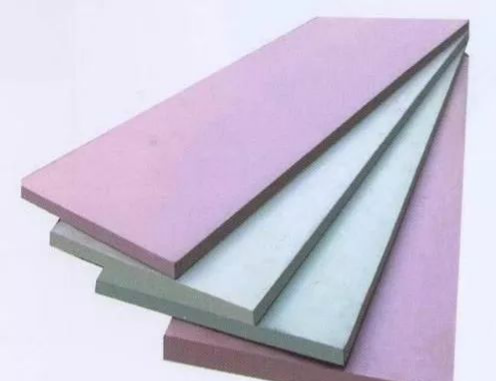
The function of the thermal insulation board is to prevent the heat from passing down and reduce the invalid heat loss of the structural layer. This requires that the insulation material has a good thermal insulation effect. Insulation materials should be made of materials with low thermal conductivity, low moisture absorption, sufficient load-bearing capacity, and no source of contaminated bacteria, and must not emit volatile that may cause offensive odors and may harm health.
Reflection coating
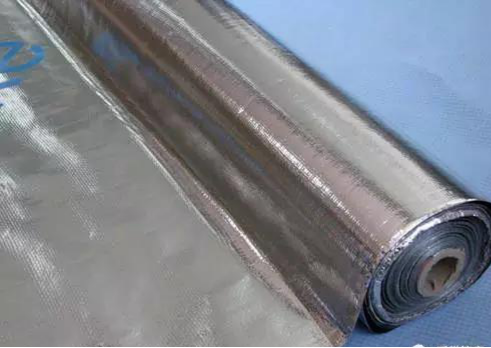
The function of it is to reflect the heat upwards and reduce the downward heat loss. As a kind of heat reflective material, the reflective film can effectively reduce the loss of thermal energy and can play a role in accelerating temperature rise. Reflectivity and corrosion resistance are the basic criteria for measuring the quality of a reflective film. Reflectivity determines energy efficiency. Corrosion resistance determines the service life of a reflective film.
Boundary insulation strip
Hot energy loss is due to heat loss caused by poor thermal insulation of the enclosure structure, also caused by conduction heat through the wall. The purpose of the boundary insulation strip is to reduce the heat transfer to the outside through the wall and reduce the heat loss of the floor heating system. On the other hand, the boundary insulation strip also has the function of expansion joints, so the boundary insulation strip is also very important.

Galvanized steel wire mesh
When the floor insulation layer is spliced with insulation boards, there may be cracking or partial collapse of the tile gap due to uneven load. Therefore, in order to overcome the cracking or partial collapse of the tile gap caused by the uneven load on the ground, it is necessary to reinforce the steel mesh to avoid the above problems. The good quality wire mesh should be galvanized to slow down the corrosion rate of the wire mesh.

Plastic clamp
The fixing method of floor heating pipes is mainly fixed by clamps. The use of clamp increases the speed of construction of floor heating. The disadvantage is that a very small amount of reflective layers and insulation layers are destroyed. The clamp currently sold in the market are mostly made of recycled plastics, which are black, while the clamp with better quality are mostly made of new materials and are white and transparent. However, due to the new material production, the cost is higher and the number of people is less to use.

Insulation sleeve
It plays an important role in protecting the floor heating pipes and the main pipe, preventing external factors from damaging the pipes and delaying the aging of the pipes caused by ultraviolet radiation. On the other hand, the thermal insulation performance of the insulation sleeve plays a certain energy-saving effect on the floor heating system. The insulation pipe products in the market frontiers are made of cross-linked PE, which has excellent insulation effect and environmental protection.